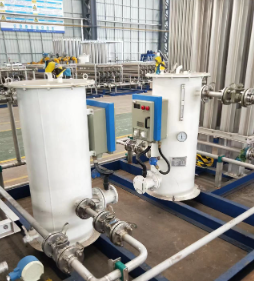
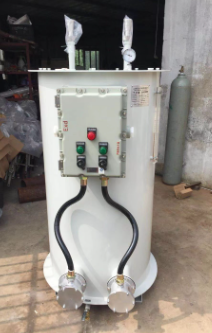
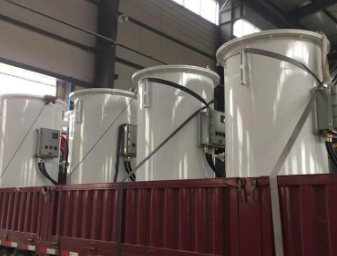
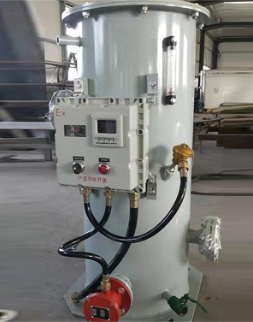
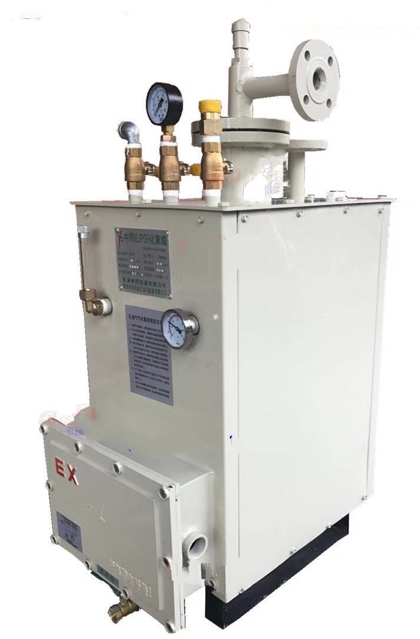
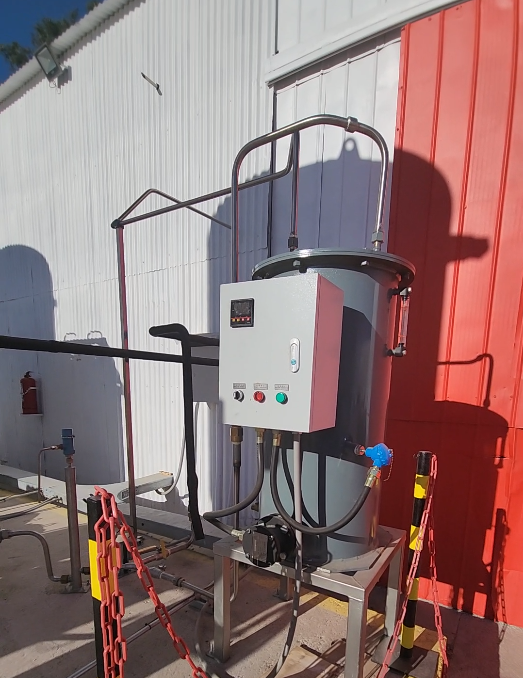
For propane/LPG, butane. Capacity ranges from 200 GPH to 12,000 GPH, with a compact footprint. Forced draft power burners. Low fire/high fire modulation
The water bath electric heating vaporizer mainly consists of a cylindrical container and a system filled with tubes.
Liquid ammonia water bath electric heating vaporizers are widely used in many fields, especially in scenarios where liquid ammonia needs to be converted into gaseous ammonia for further processing or utilization.
The working principle of the liquid ammonia water bath electric heating vaporizer is to convert liquid ammonia into gaseous ammonia by means of electric heating and hot water bath.
Water bath vaporizer is a high-efficiency heat exchange device specially used to convert low-temperature liquid gas into gaseous state.
When operating a water bath vaporizer, first ensure that the device is placed on a stable workbench and check that all key components are functioning properly.
Maintenance of the water bath vaporizer is essential to ensure stable operation and extend the service life of the equipment.
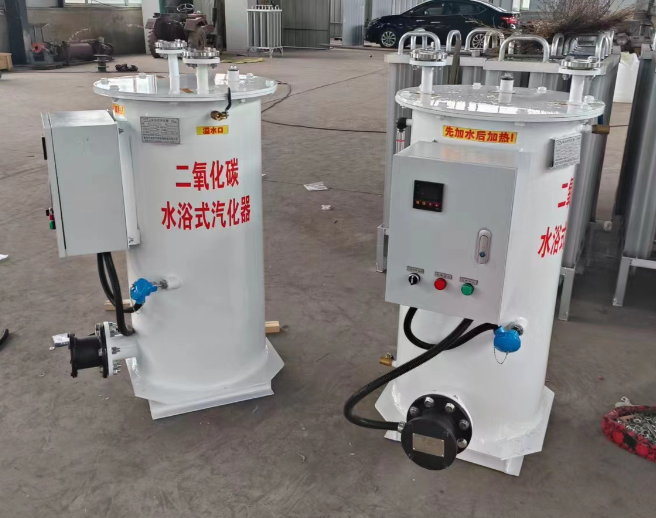
Carbon dioxide water bath vaporizers are widely used in situations where liquid carbon dioxide needs to be converted into gaseous carbon dioxide, such as industrial production lines, civil pipeline gas systems, etc.
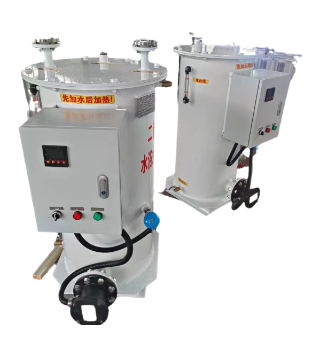
CO2 water bath vaporizer uses electric heater to heat water in the cylinder, and then uses this hot water to heat the liquid CO2 in the coil to convert it into gaseous gas.
The carbon dioxide water bath vaporizer is a highly efficient heat exchange device that exchanges heat between hot water and low-temperature liquid carbon dioxide, thereby vaporizing liquid carbon dioxide into gas.
As the propane picks up the heat it is transformed from a liquid to a vapor. The rate this occurs is based on the flow rate of the propane entering the bath and the amount of heat being introduced. All of these functions are controlled by a programmable logic control (PLC) located in the control cabinet of the unit. Safety features keep the system functioning properly and both input and output pressures and temperatures are monitored by the PLC.